Changing the Subject

Welcome

Of the thousands of projects High Tech High teachers and students have undertaken since the first school opened in 2000, the fifty documented in this book and website are a mere sampling; we hope they provide inspiration and a starting place for many more creative iterations.  We curated them by asking current and former teachers (now numbering in the hundreds) to nominate work that was both inspiring and replicable.

Our purpose is to share highlights from High Tech High’s first twenty years.  In doing so, we aim to describe, not prescribe.  “This isn’t how to do it, it’s how we did it.” 

“Knowledge emerges only through invention and reinvention, through the relentless, impatient, continuing, hopeful inquiry human beings pursue in the world, with the world, and with each other.”(Paulo Freire, Pedagogy of the Oppressed, page 53)

Chapter 1: Invention and reinvention

In these projects students and teachers are creating something new in the physical world.

Students created an illustrated book that accessibly explained different economic concepts.
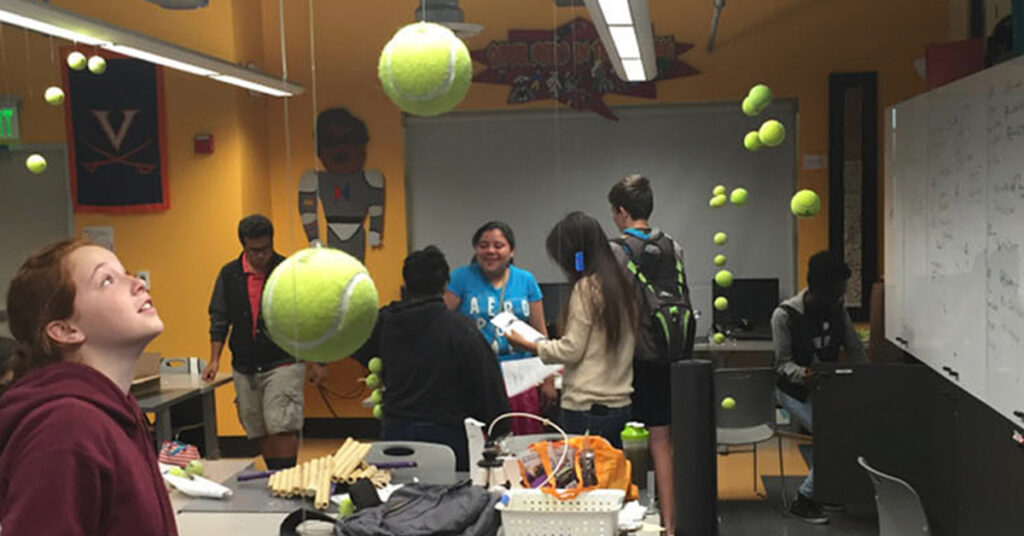
For this gravity science project, students documented their own physics experiments in order to fight gravity using kites, balloons, and other flying objects of their own creation.
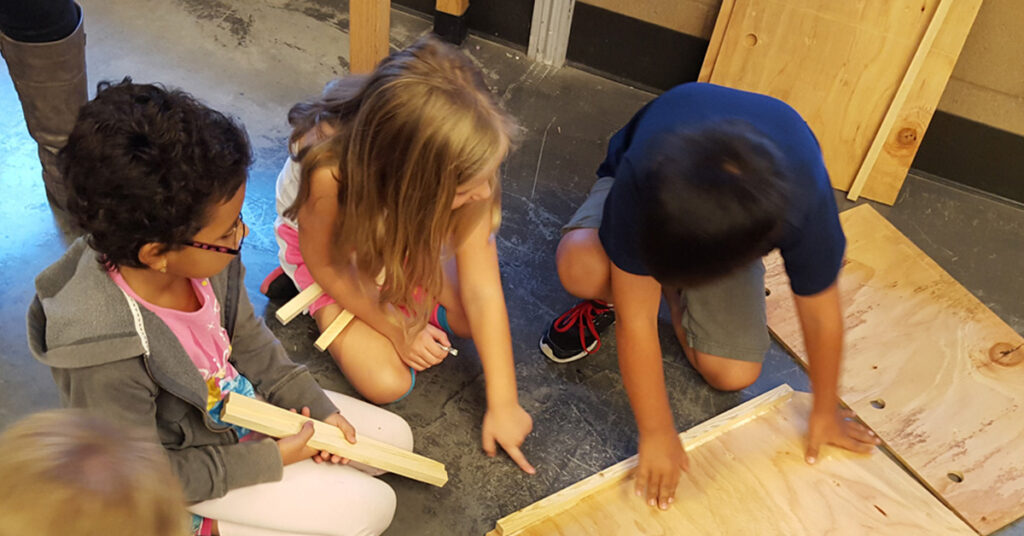
Students created owl boxes for predatory birds to live in near a new building on the HTHCV campus, to learn about the local environment and help deal with the school's rodent problem.

Chapter 2: In the world, with the world

In these projects, students are understanding the need for change in their world and making that change, through service or community action.

Students explored how people use parks to connect to themselves, each other, and to nature while also learning about the stars on trips to these parks.
Students learned biology concepts and scientific methods through a real world challenge -- growing food with no natural light, no gravity, and hardly any space.

Chapter 3: With each other

In these projects, students are investigating their beliefs and relationships and changing them.

Students designed escape rooms that would challenge participants’ implicit bias by incorporating content related to attitudes about age, race, gender, sexuality, and mental health in each escape room puzzle.